
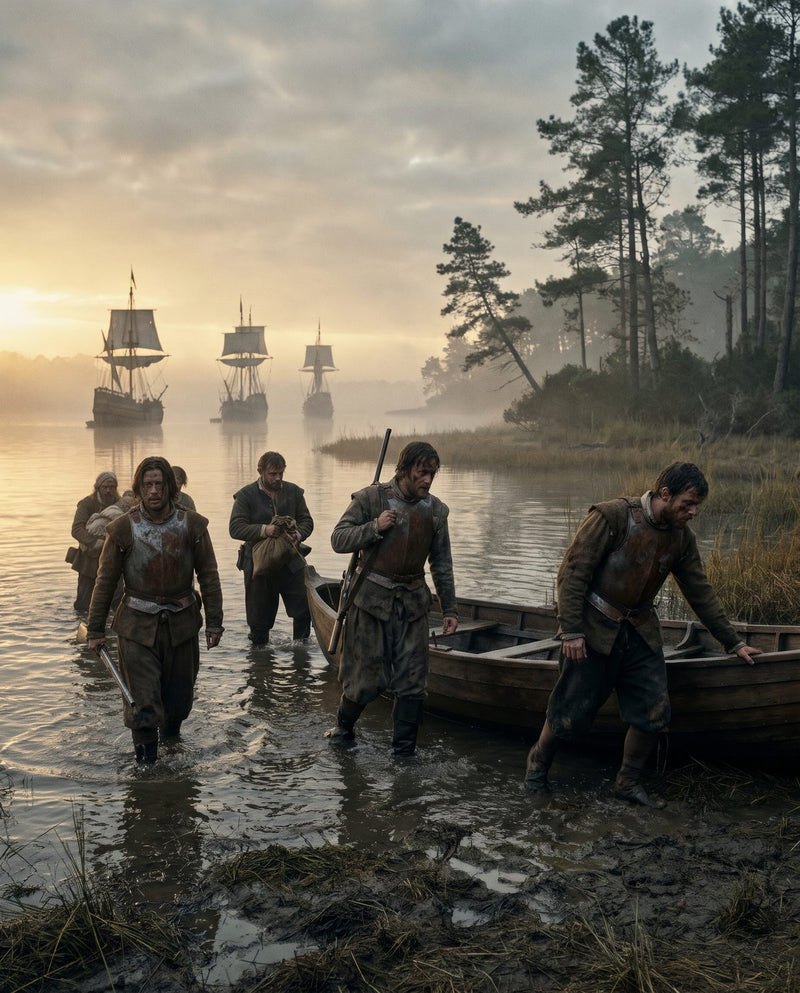
May 14, 1607
A foothold at Jamestown
104 English men and boys land on the James River and found the first permanent English settlement in North America.
Every state has a legend

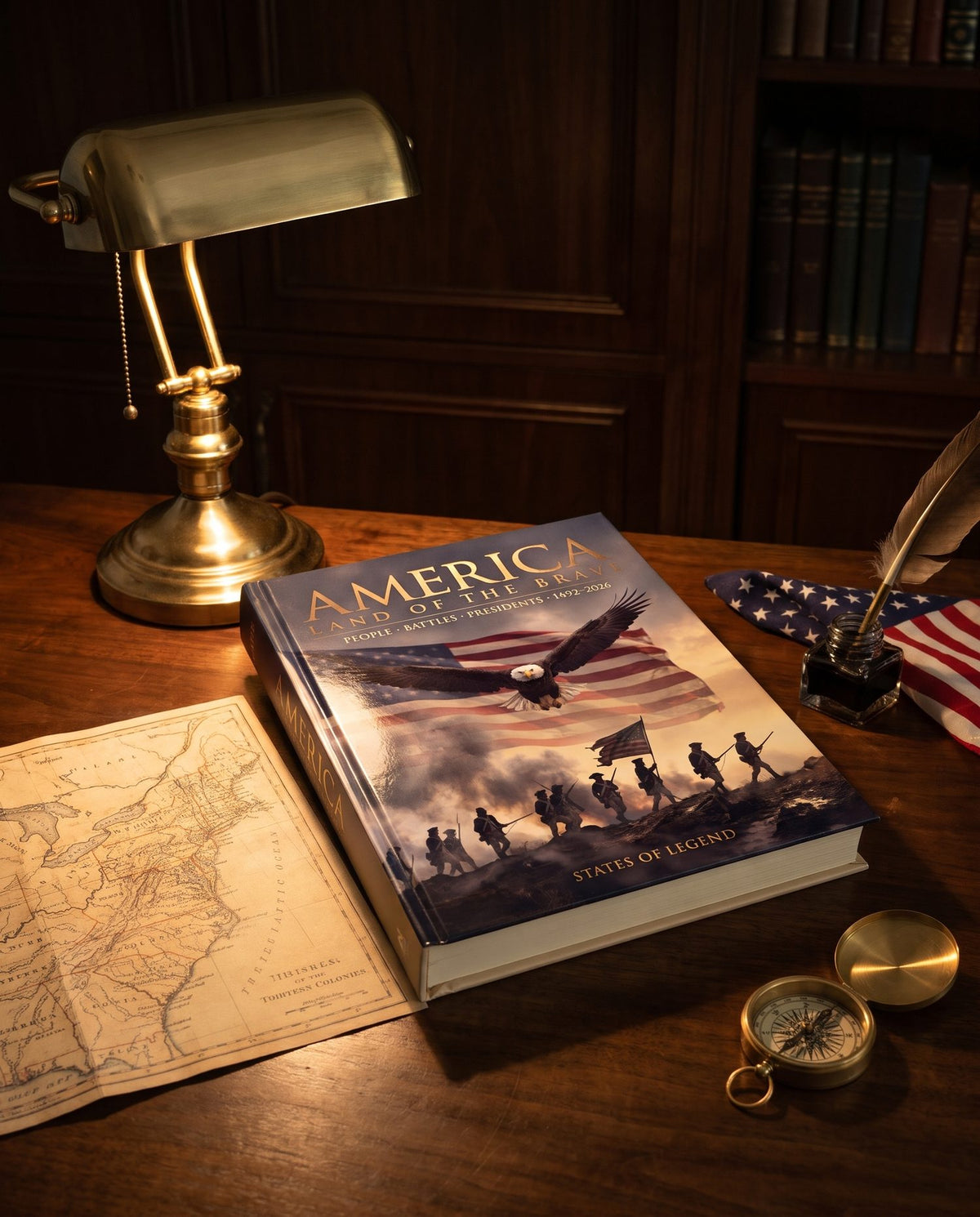
People · Battles · Presidents · 1492–2026
From the first ships to the 250th Fourth of July, the story of the United States told the way it deserves to be told: in full color, at full size, and without skipping the hard parts.
Free US shipping on orders over $75.
Two hundred and fifty years ago, thirteen colonies declared themselves a nation. This is the whole story since: the farmers on Lexington Green, the boats on the Delaware, the long fight over who “all men” would include, the rails, the beaches, the Moon. Proud, never whitewashed, and checked fact by fact.
May 14, 1607
104 English men and boys land on the James River and found the first permanent English settlement in North America.
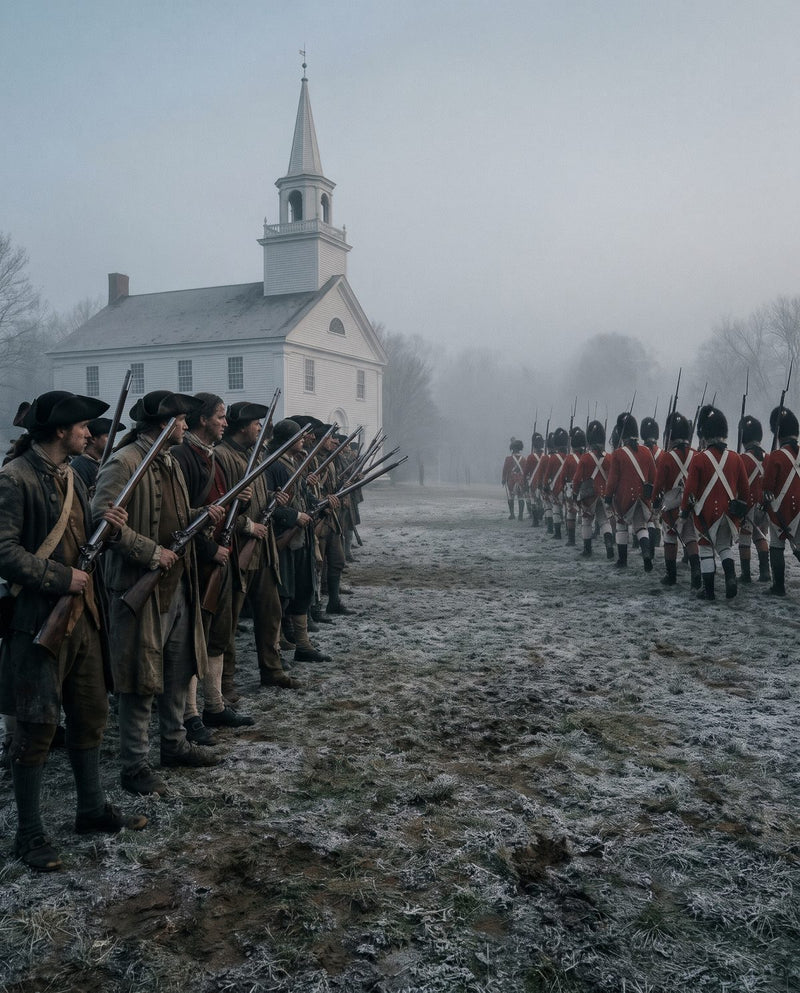
April 19, 1775
Militia and British regulars meet at dawn. By nightfall the colonies are at war.
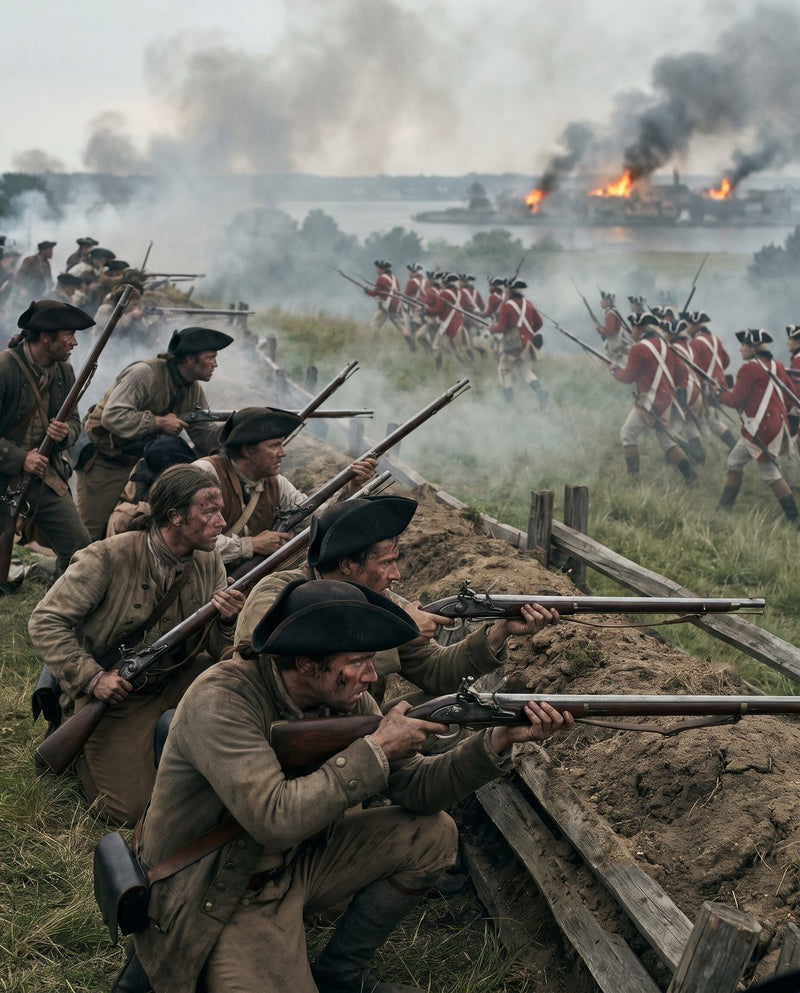
June 17, 1775
Fought mostly on Breed's Hill. The British take the ground at a cost that tells both sides this will be a long war.
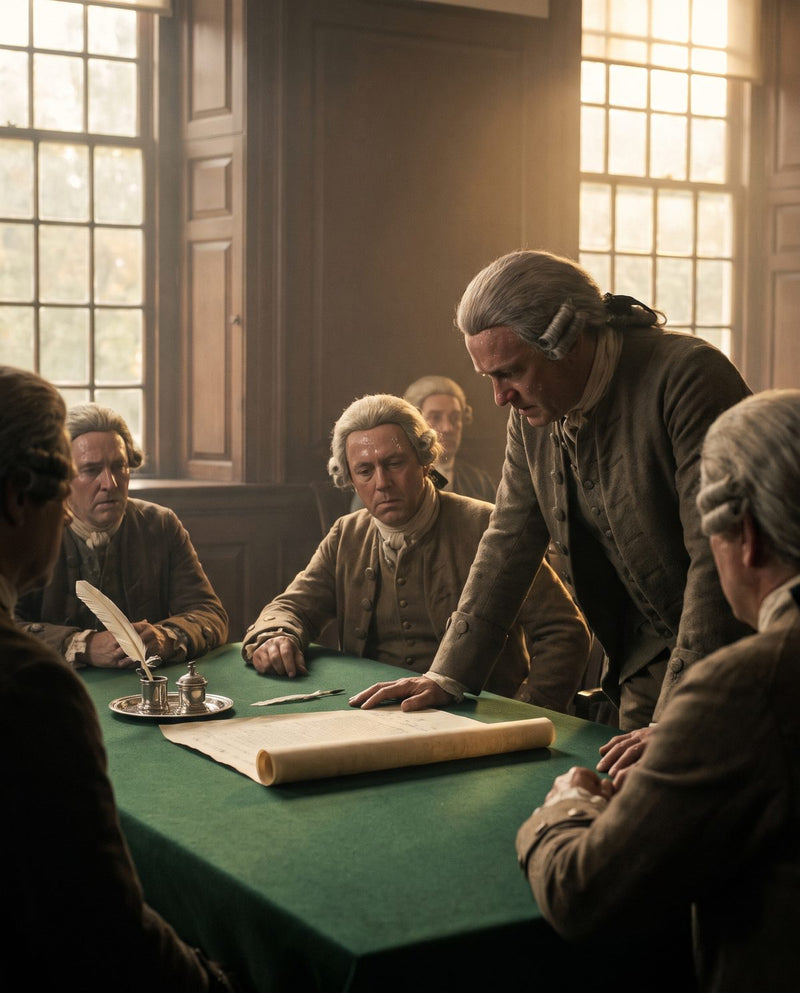
July 4, 1776
Congress approves the final text. John Dunlap prints it that night; most delegates sign the parchment on August 2.
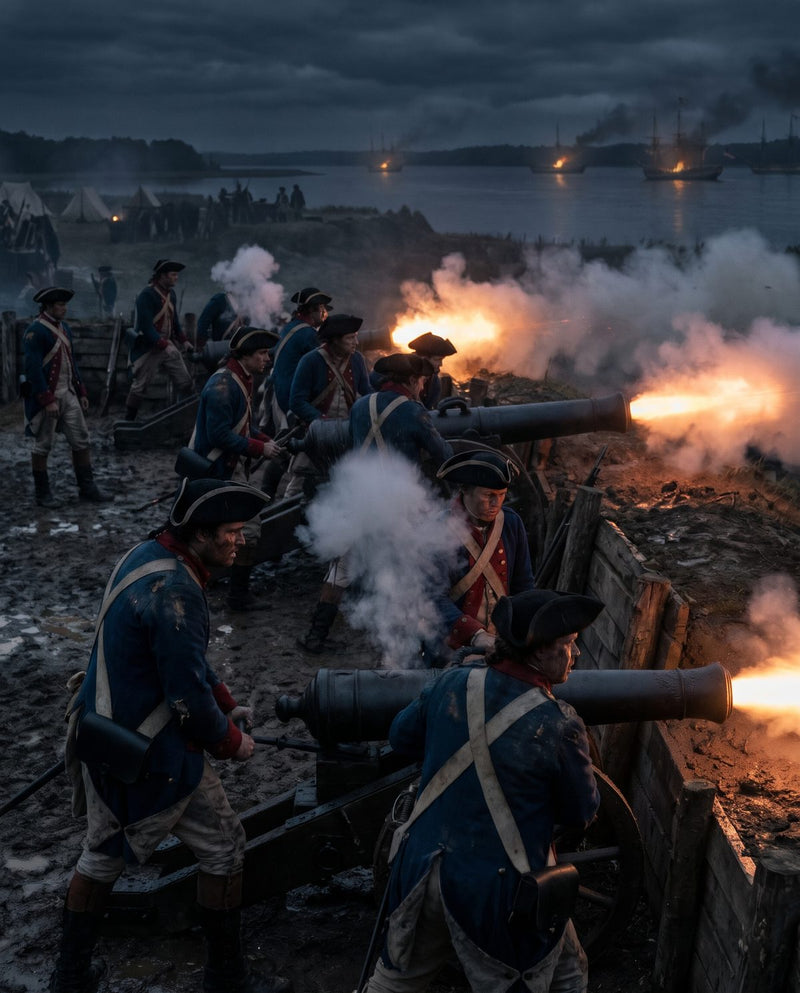
October 19, 1781
Surrounded by American and French forces, General Cornwallis surrenders. Independence is all but won.
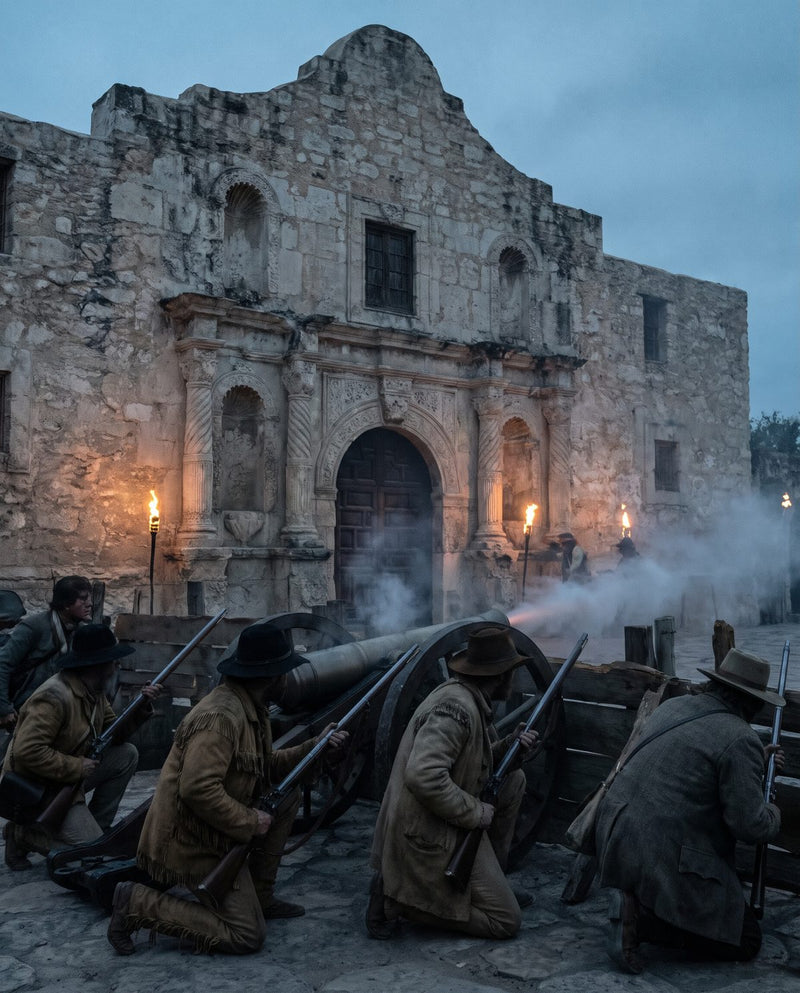
March 6, 1836
After a thirteen-day siege the Alamo falls at dawn. Six weeks later Texas wins its independence at San Jacinto.
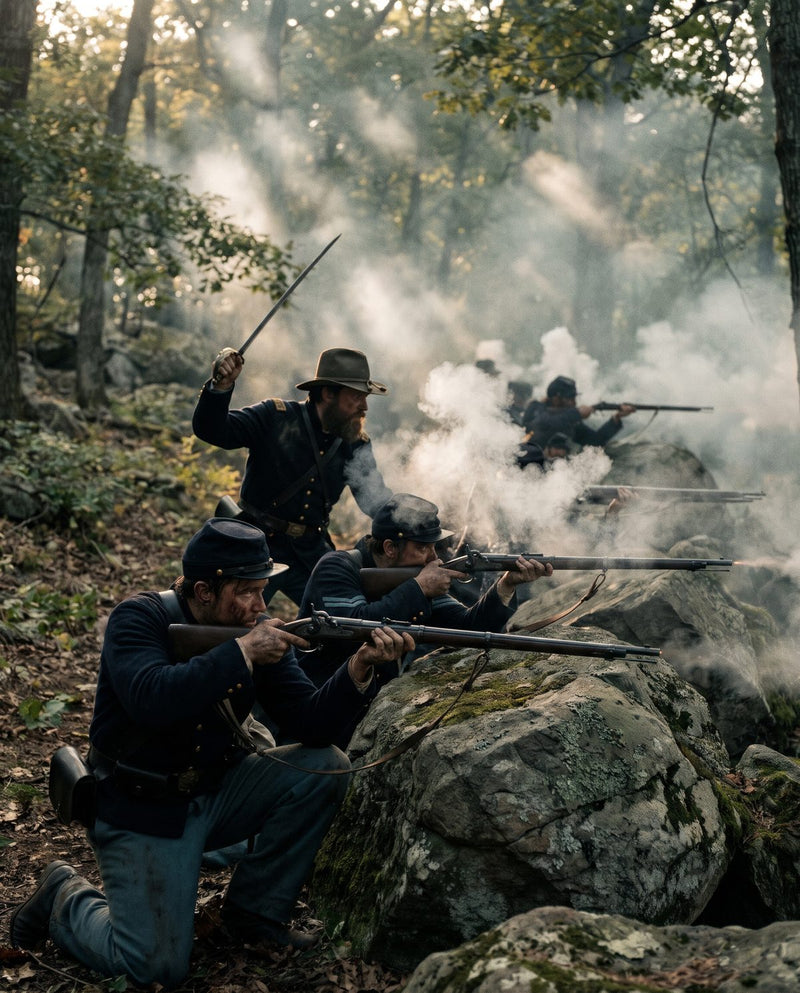
July 1–3, 1863
Three days, more than 50,000 casualties, and the turning point of the Civil War in the East.
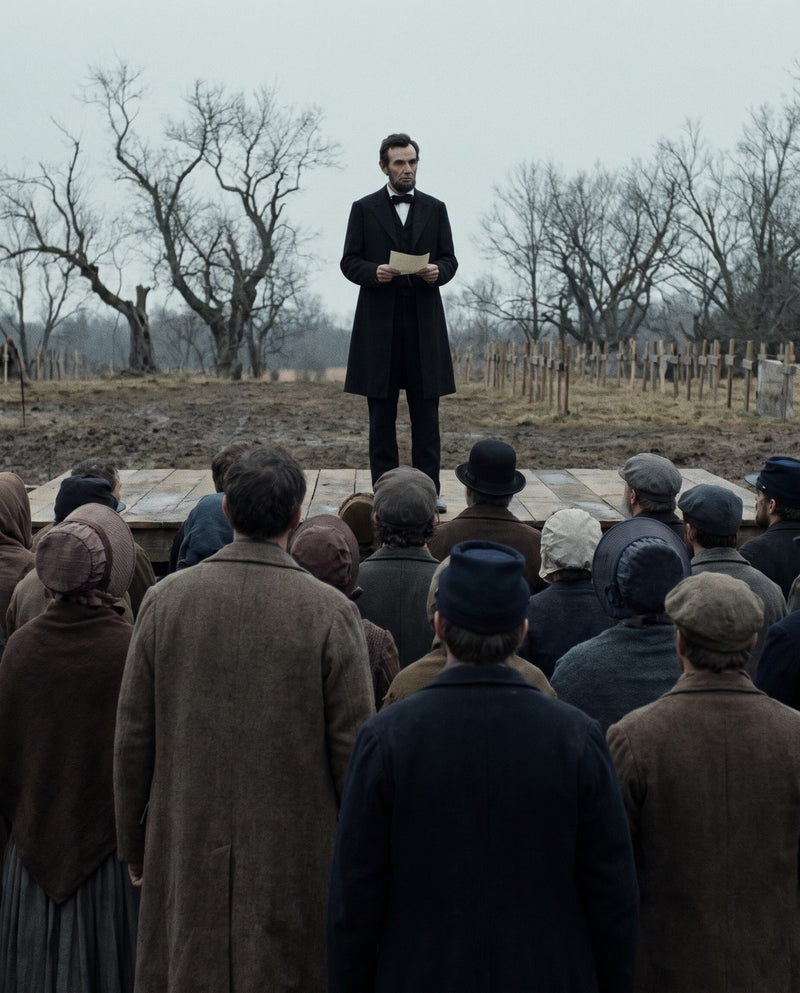
November 19, 1863
Lincoln speaks for about two minutes at the new national cemetery. Some 270 words outlast the war.
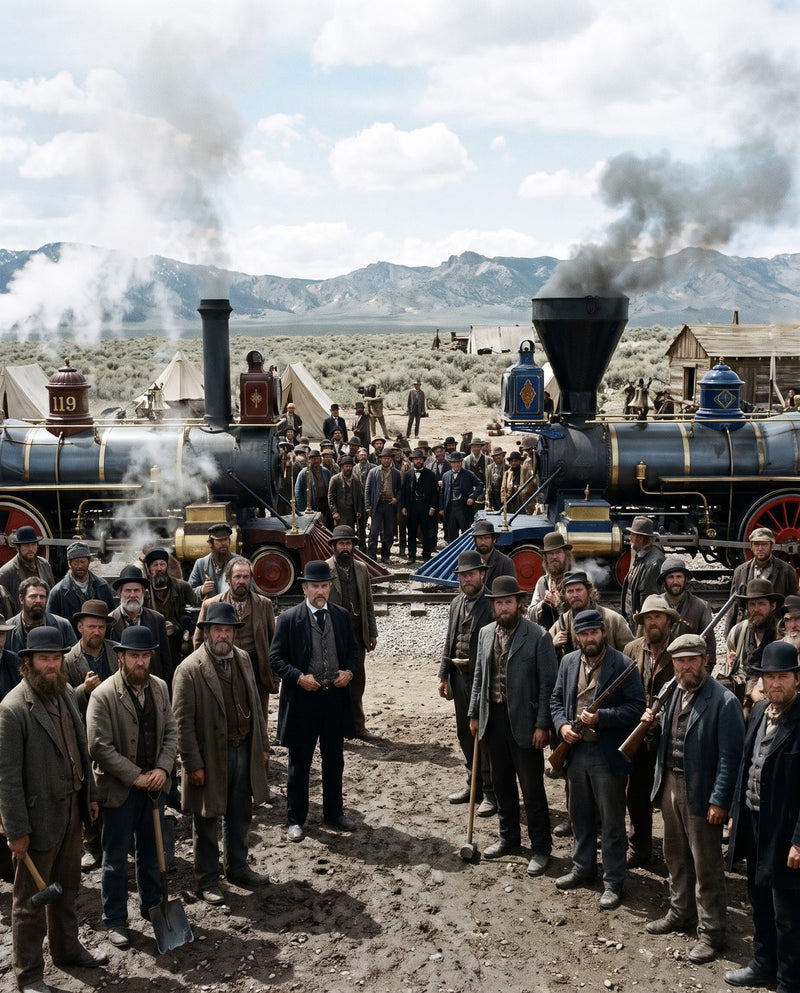
May 10, 1869
At Promontory Summit, Utah, the rails of the first transcontinental railroad are joined.
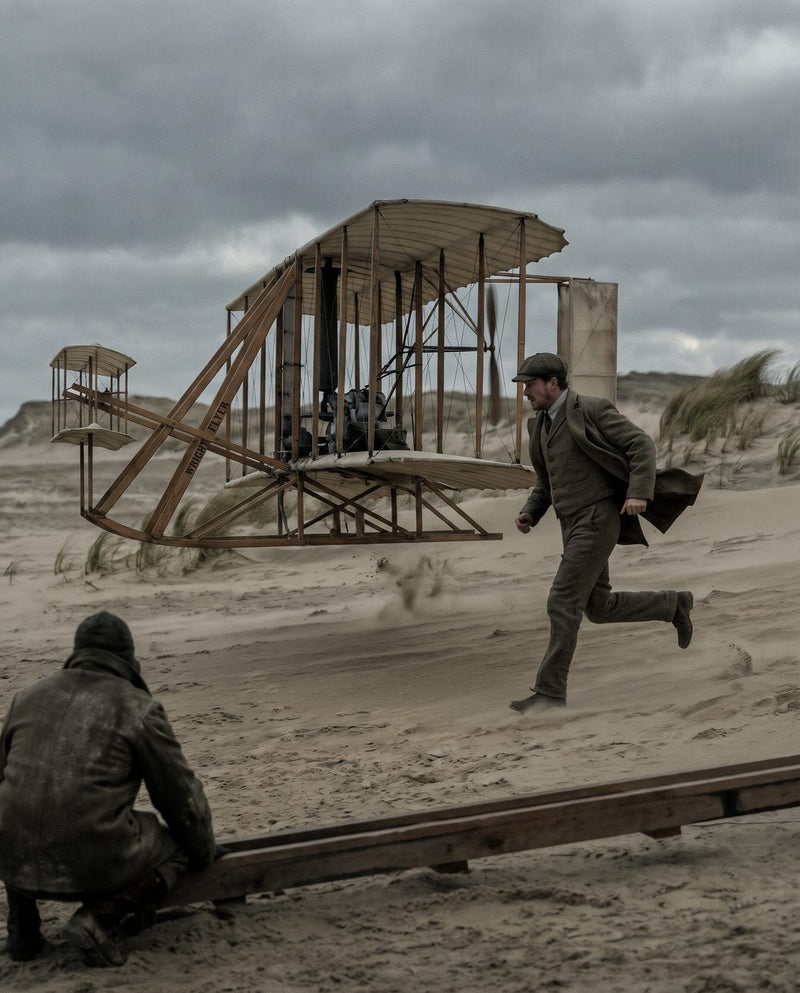
December 17, 1903
The first powered flight lasts 12 seconds and covers 120 feet. The age of flight has begun.
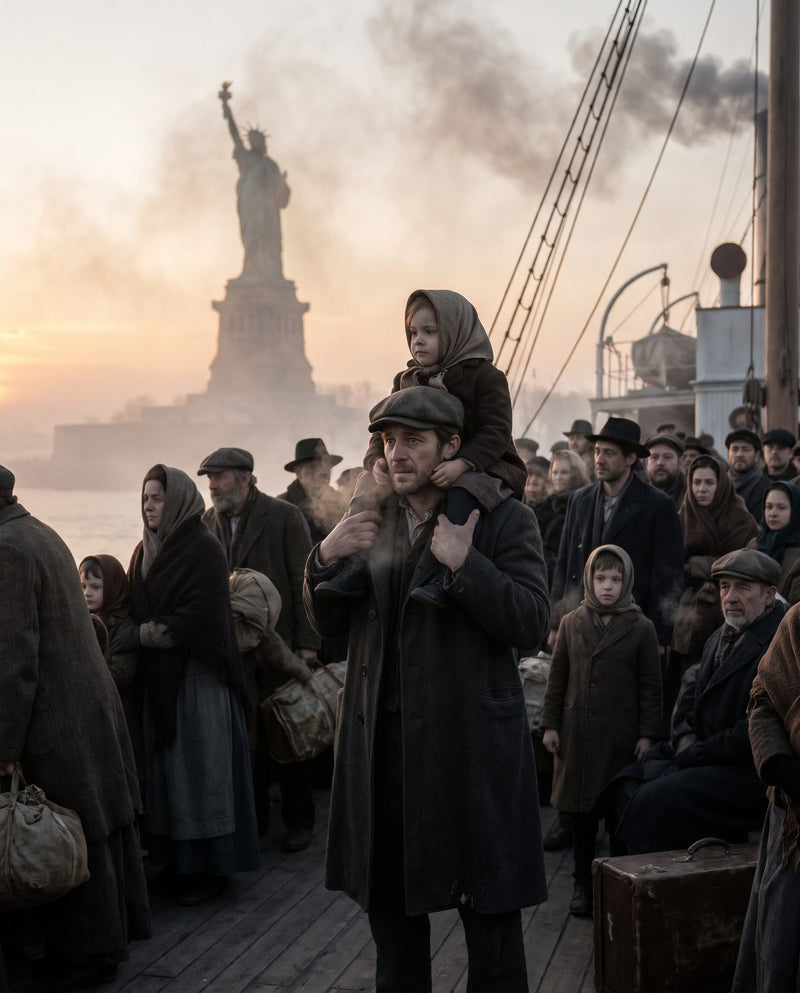
1907
In its busiest year, more than a million immigrants pass through Ellis Island.
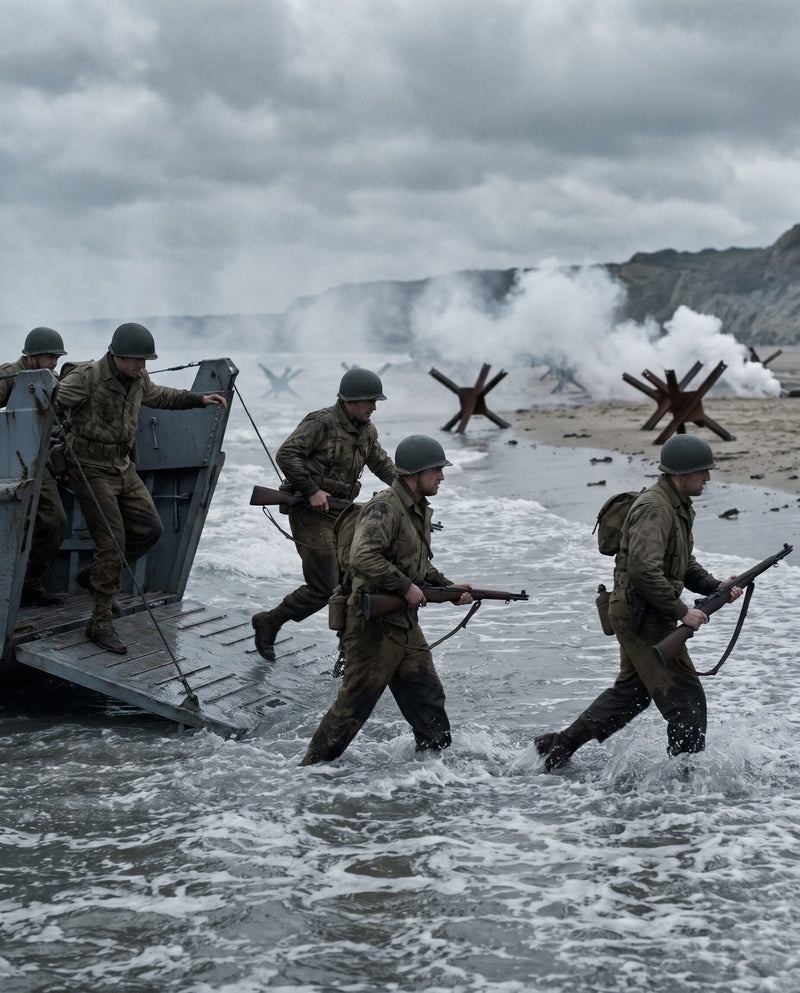
June 6, 1944
American, British and Canadian troops storm the beaches of Normandy in the largest seaborne invasion in history.
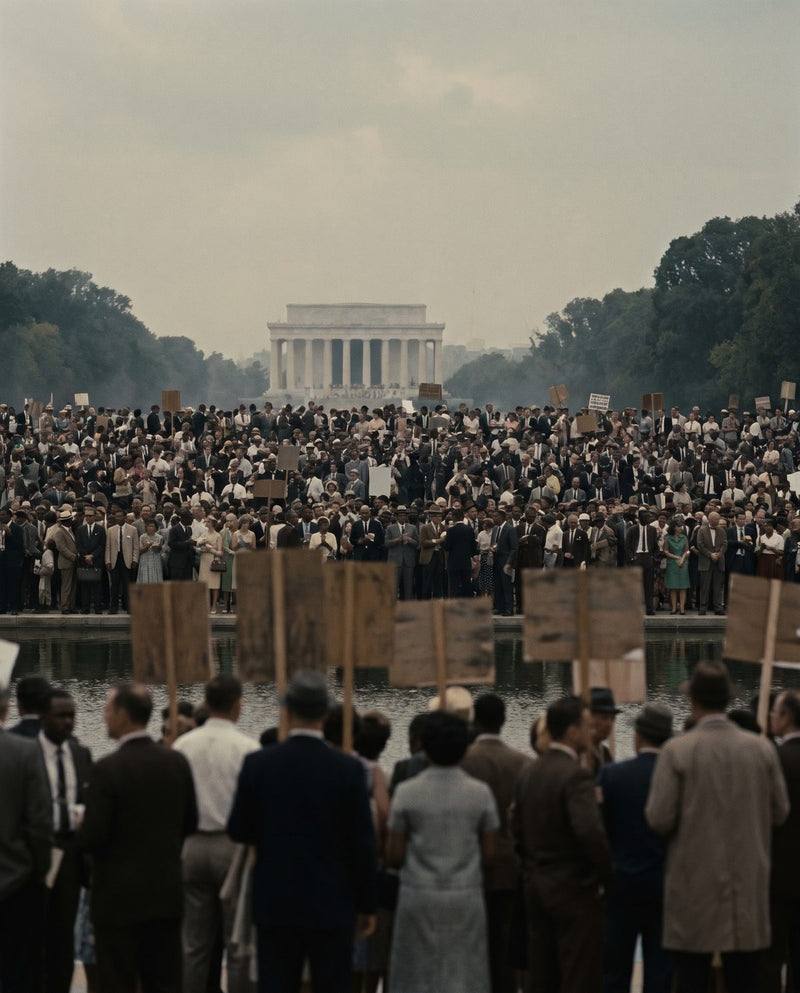
August 28, 1963
About 250,000 people gather at the Lincoln Memorial for jobs and freedom.
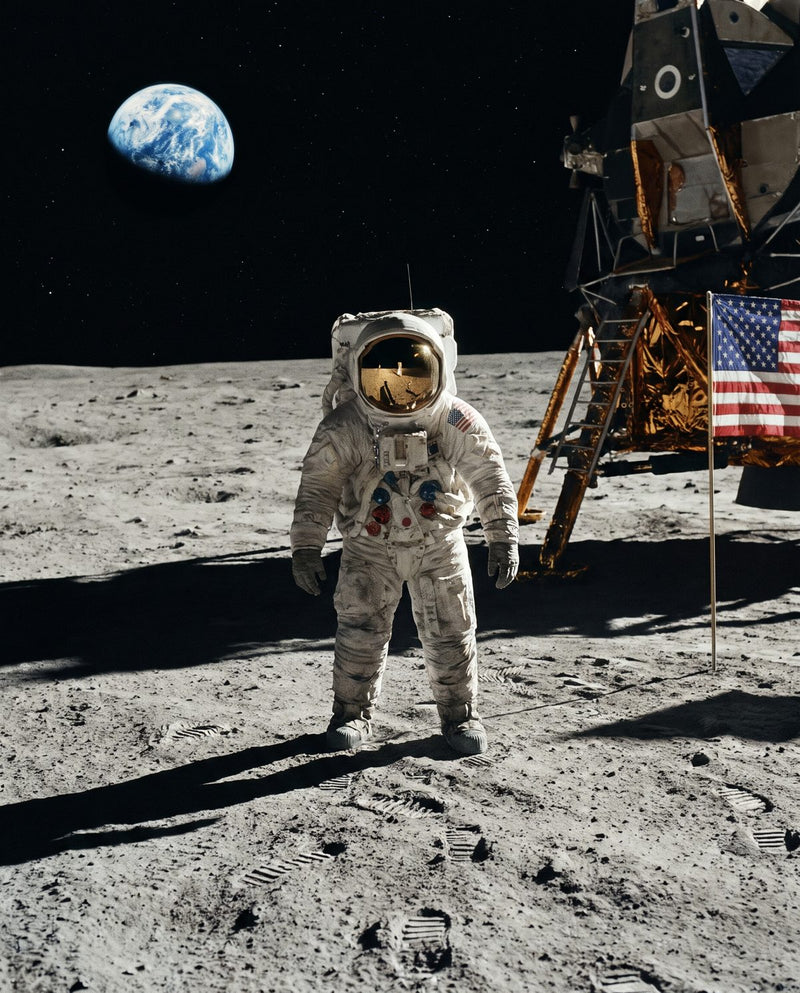
July 20, 1969
Armstrong and Aldrin land on the Moon while more than half a billion people watch.
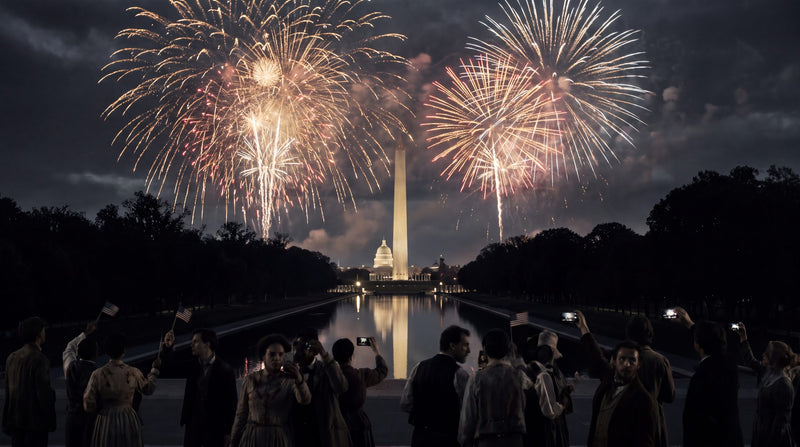
July 4, 2026
The nation marks two hundred and fifty years of independence.
Each era opens with a full-page illustration, then the events, people, battles, documents and inventions that defined it. The presidents and the fifty states close the book.

July 1–3, 1863 · Pennsylvania
The largest battle ever fought in North America, and the high-water mark of the Confederacy.

June 17, 1775 · Massachusetts
Fought mostly on Breed's Hill, it proved that farmers behind earthworks could stand against the British army.

Sept. 28–Oct. 19, 1781 · Virginia
American and French forces trap Cornwallis against the York River and force the surrender that ends the war.

Feb. 23–Mar. 6, 1836 · Texas
A thirteen-day siege, a dawn assault, and a battle cry that carried Texas to independence.

June 6, 1944 · Normandy, France
Omaha Beach, the hardest ground of the invasion, and the first step on the road to Berlin.
Grover Cleveland and Donald J. Trump each served two non-consecutive terms, so the count reaches 47 with 45 people. Each presidency has its own page of facts and firsts.
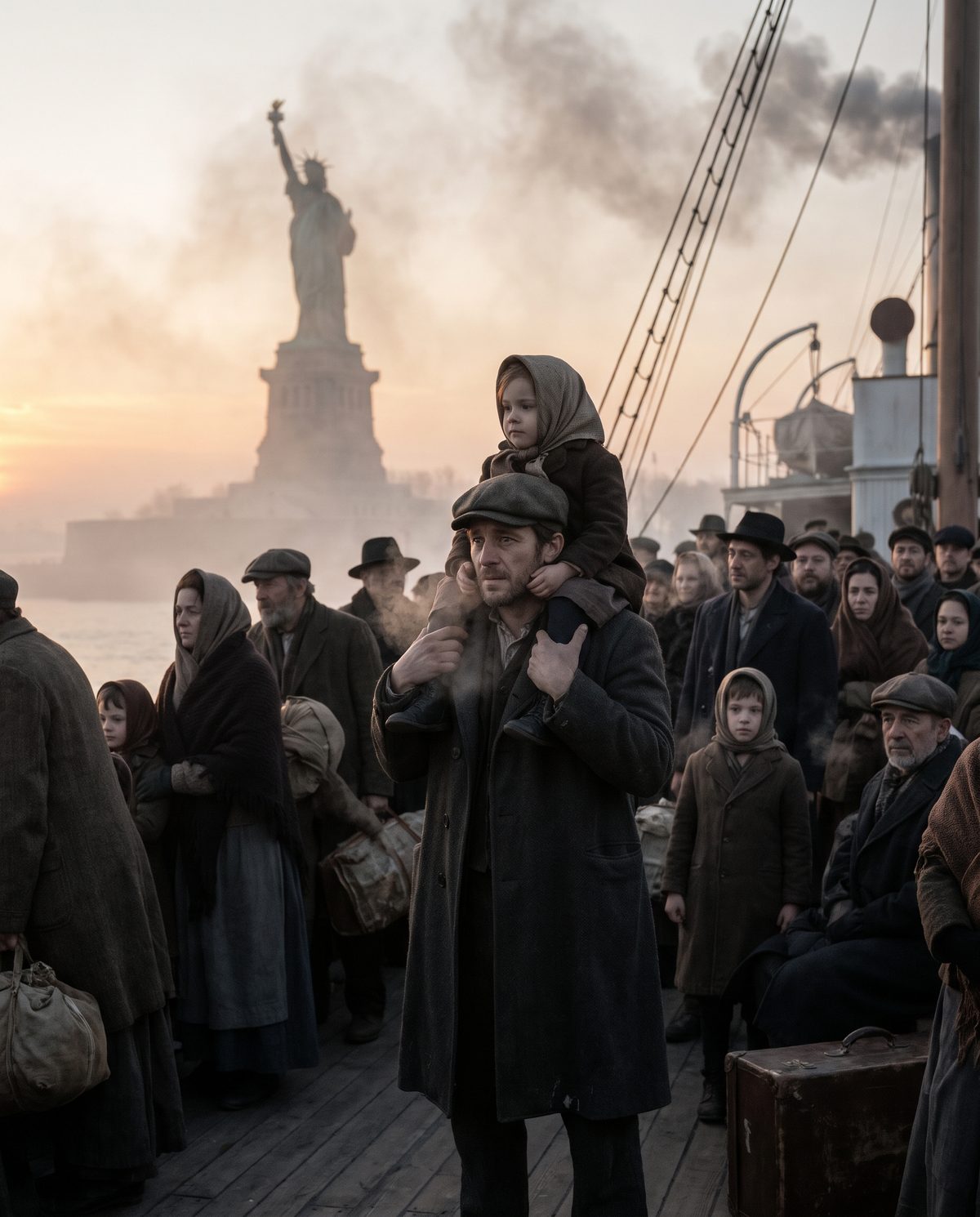
Give me your tired, your poor, your huddled masses yearning to breathe free… I lift my lamp beside the golden door!
Emma Lazarus“The New Colossus,” 1883 · inscribed at the Statue of Liberty
Chapter 6 · The Times That Try Men's Souls
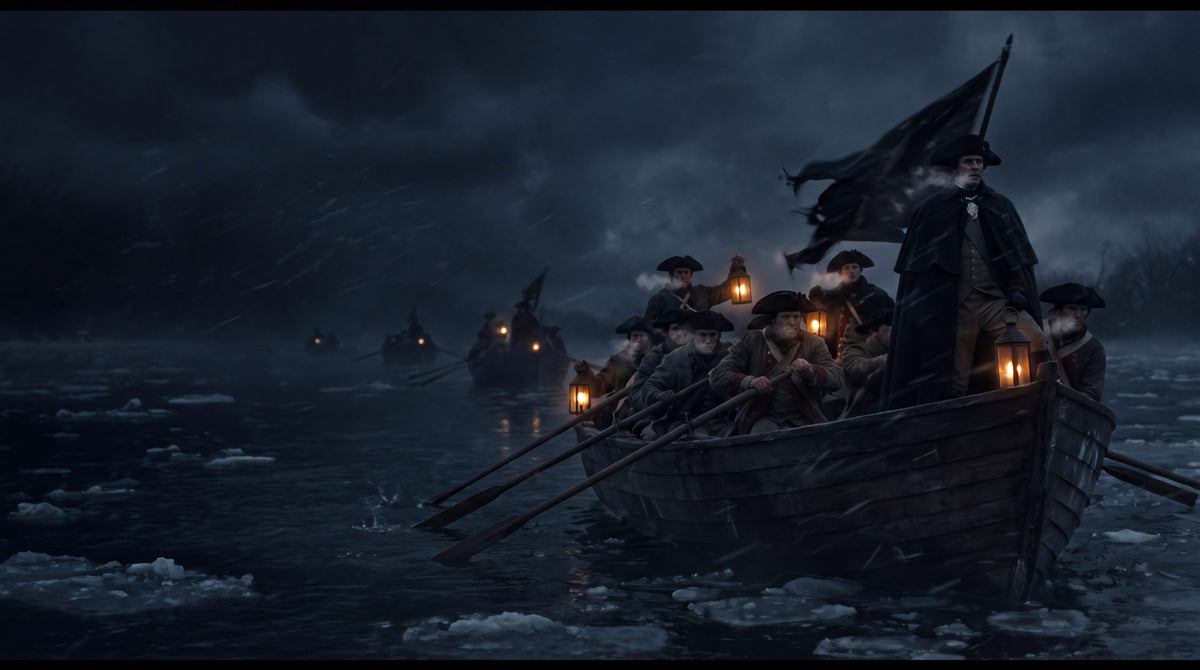
By Christmas 1776 the cause of independence was running out of time. Washington's army had been driven from New York and across New Jersey, and many of his soldiers' enlistments would expire with the year. That December, Thomas Paine put the mood into a single line: "These are the times that try men's souls."
Washington answered with a gamble. On Christmas night about 2,400 men gathered on the Pennsylvania bank of the Delaware, some nine miles above Trenton. Colonel John Glover's regiment of Marblehead sailors and fishermen worked the boats, while horses and eighteen cannon crossed on flat-bottomed ferries. A nor'easter drove sleet into their faces and ice clogged the river.
The crossing fell hours behind. "It was three O'Clock before the Artillery could all get over," Washington reported, "and near four, before the Troops took up their line of march."
Around daybreak on December 26 the Americans fell on the Hessian garrison at Trenton. Its commander, Colonel Johann Rall, was mortally wounded, and hundreds of his men were taken prisoner. The Revolution had found its second wind.
Trenton, New Jersey
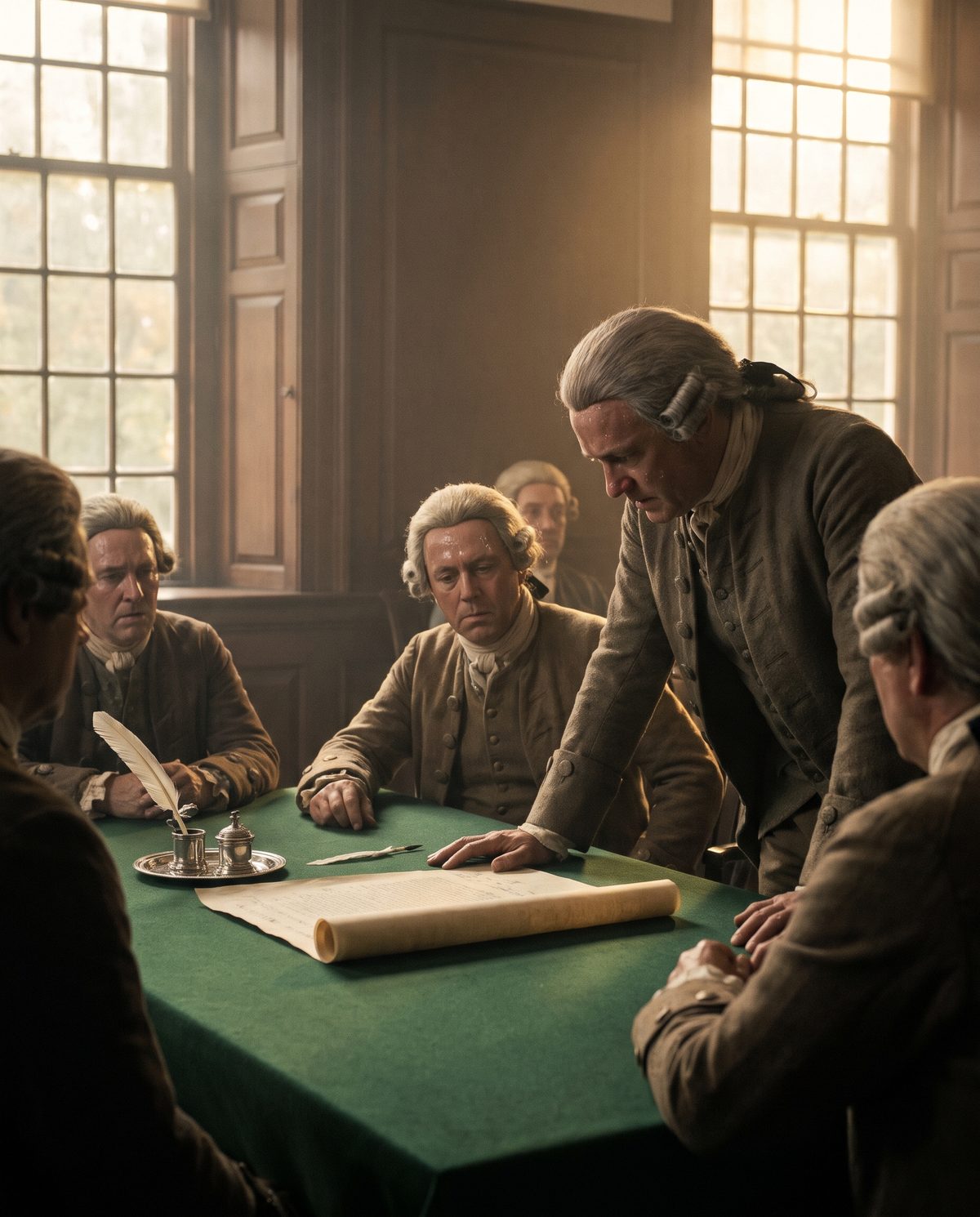
Chapter 5 · The Year of Independence
On July 2, 1776, the Continental Congress took the decisive step. Twelve colonies voted for Richard Henry Lee's resolution that "these United Colonies are, and of right ought to be, free and independent States." New York did not vote.
What remained was to explain the decision to the world. For two more days the delegates worked through the draft prepared by Thomas Jefferson, revising it line by line. They struck out a long passage in which Jefferson blamed King George III for the Atlantic slave trade, an early sign of the contradiction the new nation would carry with it.
Once Congress approved the text, the printer John Dunlap set it in type that night; twenty-six copies of his broadside are known to survive. The famous parchment came later. Congress ordered it engrossed on July 19, and most delegates signed it on August 2.
John Adams had predicted that July 2 would be celebrated "with Pomp and Parade." The nation chose the Fourth.
Philadelphia, Pennsylvania
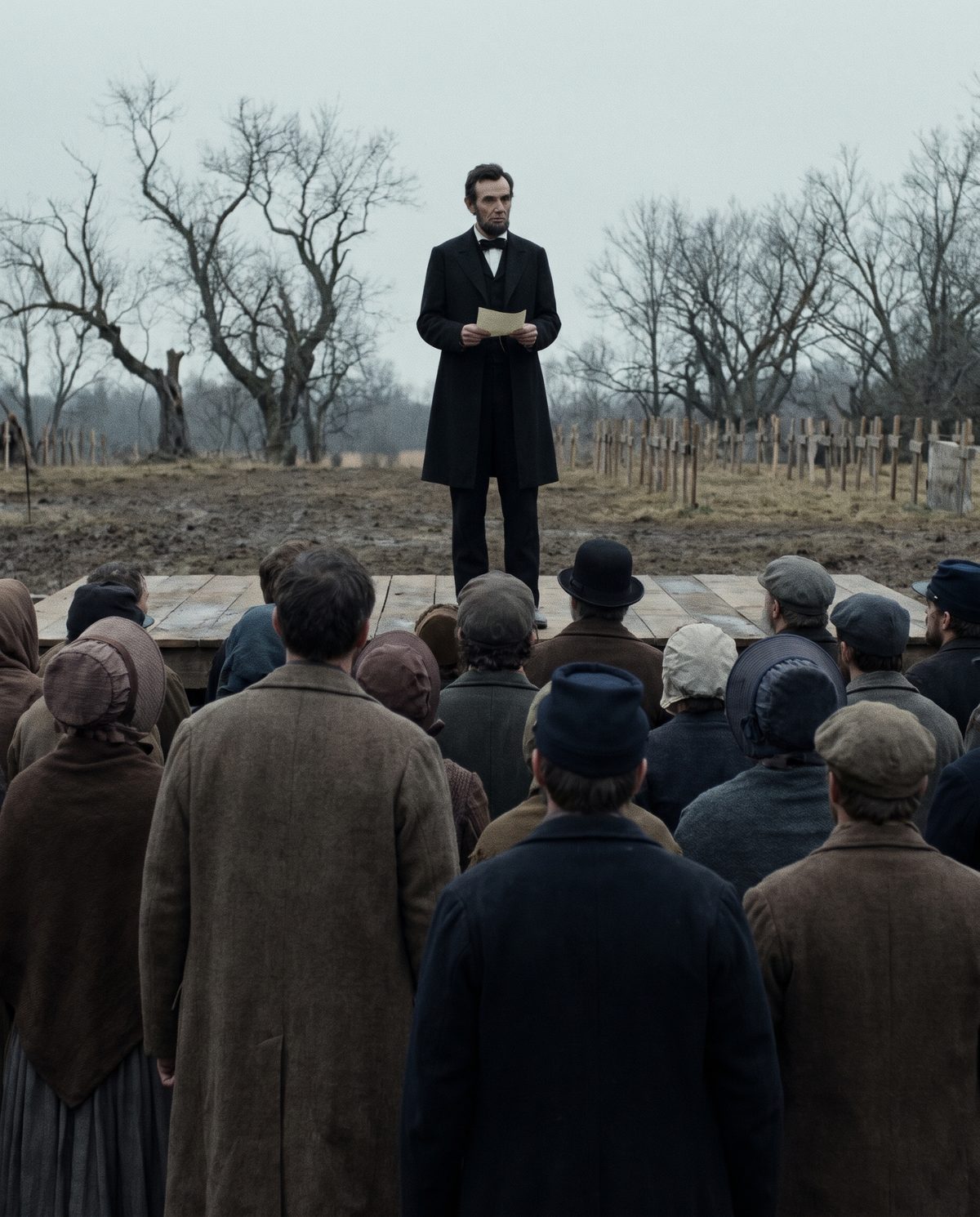
Chapter 10 · The Fiery Trial
Four and a half months after the battle, Gettysburg was still a town of graves. In three days of fighting, from July 1 to 3, the two armies had suffered more than 50,000 casualties, the heaviest toll of any battle of the war. In the fall, workers began moving some 3,600 Union dead into seventeen acres of new ground.
The reburials were far from finished on November 19, when the Soldiers' National Cemetery was dedicated. President Lincoln had come up from Washington by special train. At ten in the morning a procession set out down Baltimore Street toward a platform at the cemetery's edge. More than 10,000 people were waiting.
The celebrated orator Edward Everett spoke first, for nearly two hours. Then Lincoln rose. He had been invited to offer "a few appropriate remarks," and he spoke for about two minutes, some 270 words in all.
The next day Everett wrote to him: "I should be glad, if I could flatter myself that I came as near to the central idea of the occasion, in two hours, as you did in two minutes."
Gettysburg, Pennsylvania
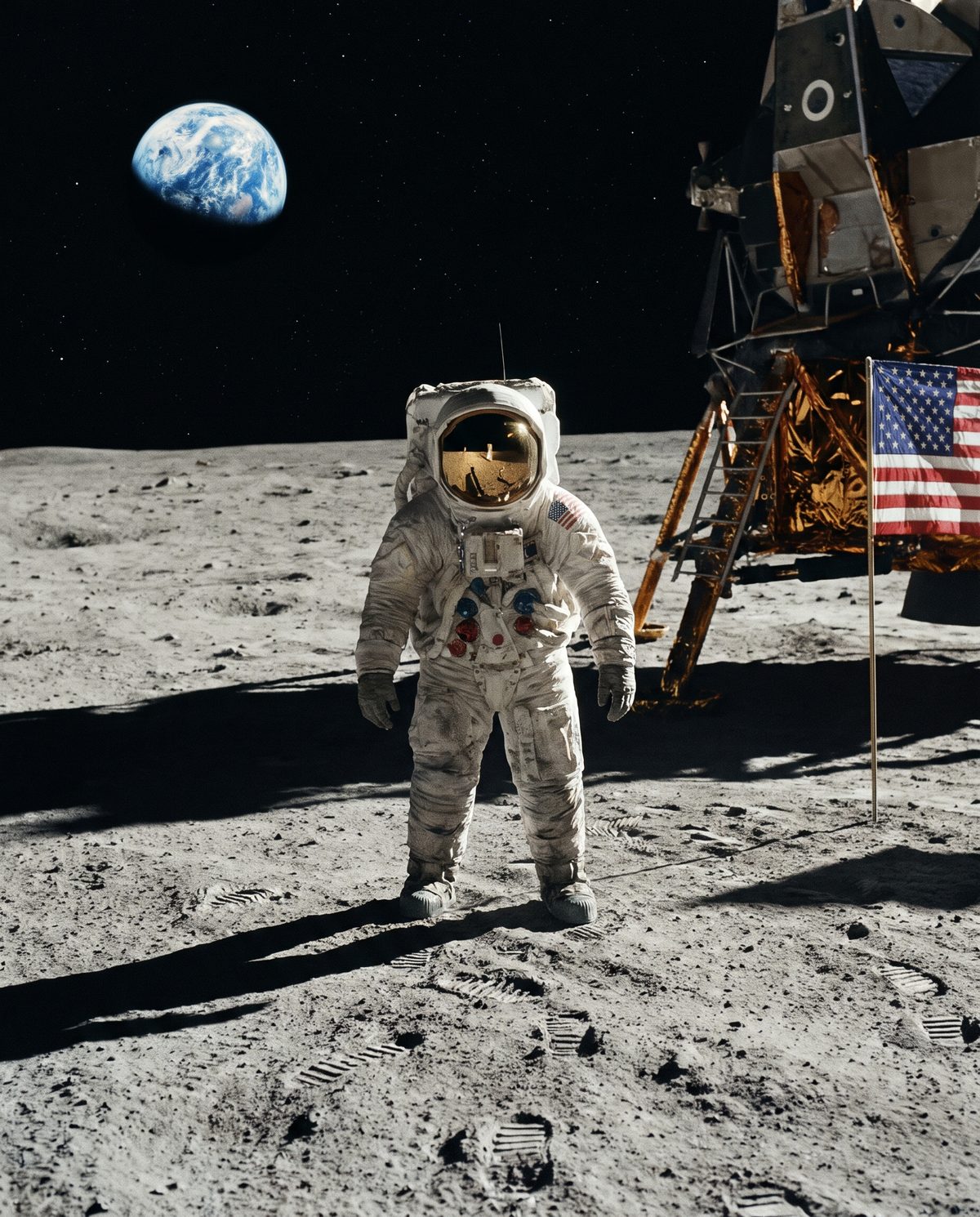
Chapter 15 · One Giant Leap
On May 25, 1961, President John F. Kennedy asked Congress to commit the nation to landing a man on the Moon "before this decade is out." Eight years later, at 9:32 a.m. on July 16, 1969, Apollo 11 rose from Launch Complex 39A in Florida.
Four days later Neil Armstrong and Buzz Aldrin took the lunar module Eagle down toward the Sea of Tranquility, while Michael Collins circled overhead in Columbia. At 4:17 p.m. Eastern time Armstrong radioed: "Houston, Tranquility Base here. The Eagle has landed."
That night, with more than half a billion people watching on television, Armstrong climbed down the ladder. At 10:56 p.m. he stepped onto the surface and said, "That's one small step for [a] man, one giant leap for mankind." Aldrin soon joined him and found two words for what he saw: "magnificent desolation."
A plaque on one of Eagle's legs carries their message still: "We came in peace for all mankind."
The Sea of Tranquility


The history, the wonder and the dark, together. The Collector's Edition arrives in a black linen slipcase stamped in gold.

Where they are said to walk. A dark vintage-style map of the United States in bone-white ink on black, with the legends...

Three engraved metal bookmarks with silk tassels, one for each book: the Eagle, the Watcher and the Rider. Made to live between...
Anything else? Write to us through the contact page. A real person reads every message.
For anyone who loves American history, and for families who want one beautiful book that tells the whole story. It is written for adults and readers from about 12 up.
Yes. It is proud of the nation's story, and honest about slavery, the displacement of Native nations and the long fight for civil rights. Proud, never whitewashed.
Every order ships from our US warehouse with tracking, and your tracking number arrives by email as soon as your books are on their way.
Free within the United States on orders over $75, and a flat $6.95 below that. Details are on our Shipping & Returns page.
You can cancel any time before your order ships. After delivery, contact us within 30 days for a replacement or a full refund.


